Pandemic and post-pandemic changed the minimum bar of what gets demanded from a cleaning provider. What used to be “clean and tidy” today means documented biosafety protocols, products with INVIMA registration and staff trained in waste management. If you’re renewing a cleaning contract this year, this guide helps you separate serious providers from improvised ones.
What a cleaning biosafety protocol is
A biosafety protocol is the document that defines how each cleaning and disinfection task is executed while minimizing biological risk for staff, clients and the cleaning crew itself. It includes:
- Products to use and correct dilutions.
- Sequence of areas (from least to most contaminated).
- PPE per task.
- Waste handling and disposal.
- Frequency and compliance records.
Without that document, what you have is cleaning staff, not professional service.
Checklist: what to demand from your provider
1. Products with valid sanitary registration
Ask the provider for technical sheets of the disinfectants. Each must have an active INVIMA registration and manufacturer-recommended concentration.
Special care with: sodium hypochlorite (bleach), quaternary ammonium, hydrogen peroxide. Each has specific applications and dilutions. A provider who “pours bleach on everything” doesn’t know what they’re doing.
2. Affiliated and trained staff
Verify:
- Affiliation to EPS, pension and ARL. For heights, ARL class V.
- Documented training in biosafety, chemical handling and waste.
- Up-to-date vaccination (Hepatitis B and tetanus at minimum for clinics).
Ask for social security payment records and training certificates. If the provider can’t show them, that’s a red flag.
3. Task-specific PPE
Nitrile or rubber gloves, mask appropriate to risk, safety glasses for chemicals, non-slip boots, closed uniform. Hospital sector adds disposable gown and shoe covers in critical areas.
The provider must supply and replace PPE. It is not the client’s responsibility.
4. Waste management per regulation
In Colombia hospital waste is governed by Decree 351 of 2014 and Resolution 1164 of 2002. Applies to clinics, IPS, practices and labs. Your provider must:
- Segregate waste: ordinary, recyclable, biosanitary, sharps, chemical.
- Use color-coded bags per regulation (green, gray, red, etc.).
- Deliver to an authorized manager and keep manifests.
If your cleaning provider just says they “handle it” without documenting the chain, they’re passing you a huge regulatory risk.
5. Documented disinfection schedule
Beyond daily cleaning, there must be periodic shifts of:
- Disinfection of high-touch surfaces (handles, handrails, switches).
- Aspersion or nebulization in offices and common areas.
- Monthly deep cleaning.
Each shift must be logged in a signed bitácora. That bitácora is your evidence before an inspection or audit.
6. WHO and Colombian regulation alignment
A provider serious about biosafety cites references:
- WHO: environmental cleaning guidelines in healthcare settings.
- MinSalud Colombia: cleaning and disinfection guidelines for specific sectors.
- ICONTEC: related technical standards (NTC 4435 for chemical safety sheets).
Red flags when evaluating a provider
- They don’t show you a written protocol manual.
- They “subcontract” staff without formal affiliation.
- They don’t differentiate products: same one for floor, bathroom and kitchen.
- No dedicated supervisor for your account.
- They don’t issue DIAN electronic invoices.
Biosafety at Limpio Colombia
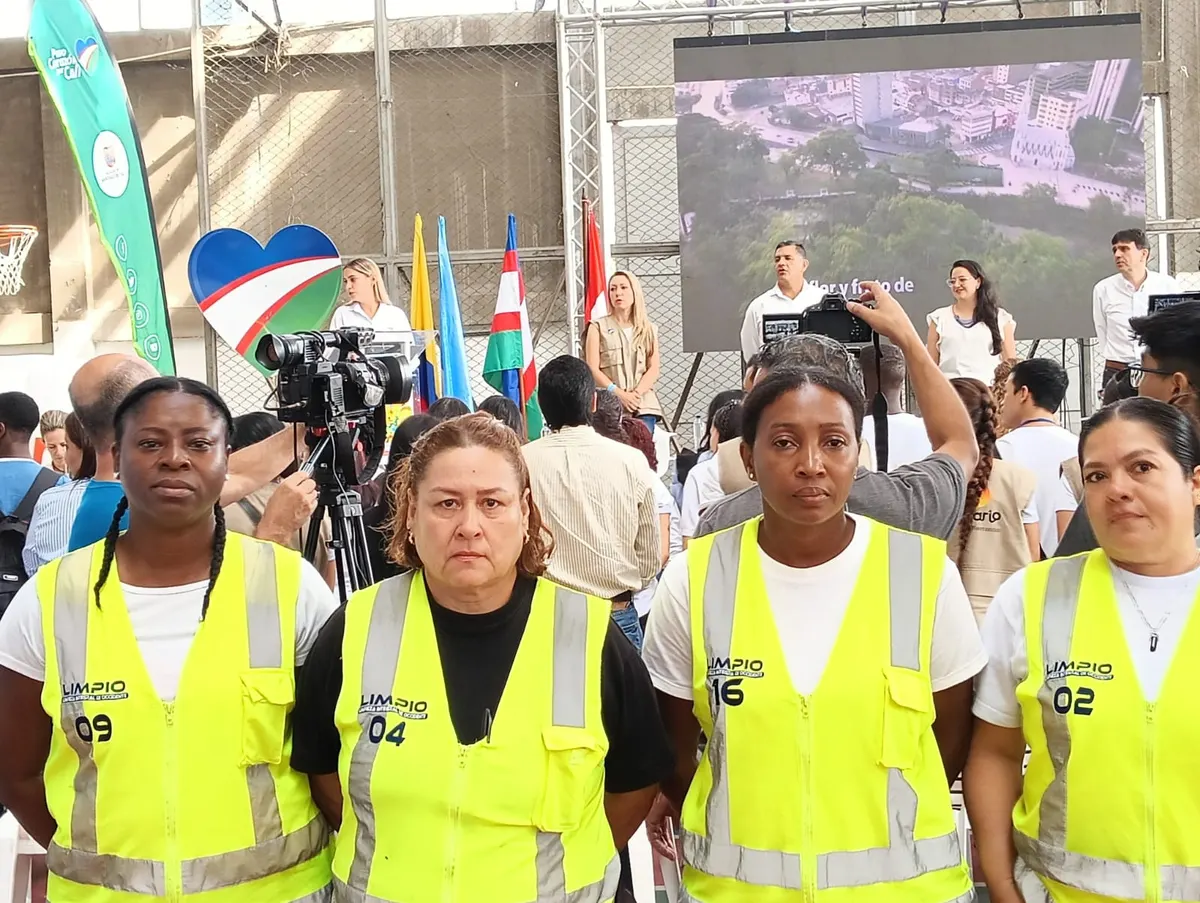
We apply certified hospital protocols, all staff has EPS, ARL and documented training, and we work with INVIMA-registered products. For healthcare we issue a service certificate. For companies, we add the shift bitácora to your monthly report.